
Realism, as a literary mode, is historically and socially defined. This idea is outlined by Georg Lukács in the essay “Narrate or Describe?” from the book Writer and Critic, where realism is defined as a product of historical change, and thus every new historical moment requires a new, “adequate” mode of representation suited to the “new social phenomena” (Lukács 117). Lukács centers his analysis of realism on capitalism, and how ‘realist’ authors from Tolstoy to Zola represented and responded to their experiences of capitalist society with different literary styles—narration or description—that best suited their historical ‘moment.’ While capitalism remains arguably the most pervasive social force today, it has caused the irrevocable destruction of our environment, and this new environment, just like each new historical era or economic system, requires its own, distinct form of representation capable of communicating the unseen truths particular to the condition of the subject living in our current ecological moment.
The geological epoch that humankind currently finds itself in has been called ‘the Anthropocene.’ The Anthropocene—with the Greek root anthro, meaning human—is defined as the current geological period in which human activity has more of an effect on the climate and environment than all natural forces combined. A few factors have caused humanity to arrive at this point, but the most notable is the capitalist exploitation of the Earth’s resources and the precarity of living under a system that forces everyday, ordinary people to participate in this exploitation. Environmental violence, like that which has led us into the Anthropocene, permeates so much of society that, rather than making itself painfully apparent, it remains unseen. Each day, people trying to remain above the poverty line in America clock into shifts at factories and drive air-polluting trucks to and from distribution centers; hungry families are sold factory-farmed, carbon-emitting meat; and the cellphones that function more as a lifeline in our digital society are powered by lithium batteries. However, in popular media and literature, such environmental violence that has ushered us into the Anthropocene is not depicted as ongoing and present, but rather as sensational, contained, and ultimately fixable through the actions of a single agent rather than a collective.
In the article “Do I Know the Anthropocene When I See It?,” film theorist Jennifer Fay presents readers with a genre she calls “climate disaster porn” (Fay 41). Fay argues that contemporary depictions of environmental devastation are inadequate in representing the severity of our current geological epoch as, rather than the everyday mundanity of environmental violence, they focus on the sensational image of landscapes blanketed by eternal winters, catastrophic natural disasters, a ‘chosen’ hero working to reverse or halt the destruction of our planet, or futuristic dystopian societies built from the debris of our decaying present. Oftentimes, climate fiction, also known as ‘cli-fi,’ is set after one event that has launched the planet into crisis. Take the film Snowpiercer (Joon Ho, 2013) for example: the film is set after the Earth’s second ice age has taken place—due to the economic exploitation and inequality that is replicated on the train that all of mankind is shepherded onto in order to escape the arctic wasteland the planet has become—without any depiction of life before the ice age, only the people left struggling to survive in a CGI, frozen apocalypse. In climate disaster porn, climate change and environmental violence are separated from the present and seen as speculative rather than a phenomenon currently taking place. Rather than demonstrating to people how they are active participants in the present destruction of the planet and inspire some kind of action against climate change, climate disaster porn prepares people for an unrealistic future of sensationalized environmental disaster, leaving them ultimately unconscious to the everyday violence taking place through a deferred fixation on a future that has already arrived, albeit less dramatically than Hollywood may portray it. This inadequate yet dominant mode of representing the effects of the Anthropocene in media warps conceptions of it in people’s minds into something fictional and neatly captured in the onscreen image, consequently keeping these people ordinarily complicit in the irreversible, ongoing destruction of the planet. In order to rouse people from this unconscious state and show them the reality of the Anthropocene and their part in it, Fay argues that we need to formulate new visual [and literary] grammars; realist grammars that utilize form to reveal the truths obfuscated by ordinary complicity and cruelly optimistic capitalistic attachments (Berlant).
Distance—temporal, spatial, and affective— is required to keep environmental violence pervasive yet unseen, as climate disaster porn’s fixation on the future and sensationalized situations demonstrates. Thus, if an ‘unrealistic’ portrayal of the effects of the Anthropocene includes those that are sensational, future-focused, and instantaneous, then a realist mode of representation conducive to our current geological epoch involves the mundane, fragmented, and present-set. Fay presents the documentary Anthropocene: The Human Epoch (de Pencier, Baichwal, Burtynsky, 2018) as an example of cinema that directly opposes climate disaster porn and makes visible what the mass complicity in and sensationalization of climate change has rendered invisible. Anthropocene: The Human Epoch covers several countries—including Kenya, the United States, Italy, Russia, and Germany—and explores the industries and everyday workers that are currently contributing to, or attempting to combat, environmental violence. Notably, the film not only depicts these people at work, like the women who operate the cranes inside of metal factories in Norilsk, Siberia, the most polluted city in Russia, it also shows their everyday lives, like their children riding their bikes along a litter-lined dirt street directly outside of the poisonous factory.
Unlike cli-fi, which fictionalizes environmental destruction and seeks to distance the audience through unrealistic, sensationalized portrayals, Anthropocene: The Human Epoch seeks to illuminate both the macro and microcosms of the Anthropocene in an unmediated, banal, and non-moralized manner. In climate disaster porn, there is a villain, someone or something to directly blame for the destruction that has taken place. However, in Anthropocene: The Human Epoch, there are just people; people going to work, praying, attending community gatherings, and trying to survive. In the film, there are people who take pride in their work, despite its environmental impact, people who are wholly and happily ignorant of the larger impact of their work, and people who are using their work to actively fight against climate change and environmental violence. Despite the differences in their actions and intentions, no one party in the film is singled out as being immoral or having a larger impact than another. As stated by Fay, “[w]e encounter the masses not at Walmart but in prayer (in a Lagos megachurch)” (Fay 54). The perpetuation of the banal evils of capitalist exploitation of the planet relies on people believing that the ‘blame’ for climate change can be assigned to one single person or one action rather than a series of repeated, everyday actions performed by everyday people who are similarly being exploited by the capitalist system themselves. In reality, the ‘blame’ for environmental violence is shared among the masses, and the form through which the Anthropocene and climate change are depicted should similarly adopt a mundane, amoral stance and objectivity rather than antagonism with its subjects, as we see in Anthropocene: The Human Epoch.
Aside from its focus on the everyday worker and ordinary life, a trait of many realist depictions/fictions/forms of expression, Anthropocene: The Human Epoch achieves a realist form particular to the Anthropocene through fragmentation and defamiliarization. In the introduction to the book Immediacy or, The Style of Too Late Capitalism, Anna Kornbluh claims that ‘immediacy’ is the style of our late stage of capitalism that currently dominates literature, art, and media at large. Immediacy is achieved through the negation of the medium in the act of mediation, resulting in the most immersive, accessible product possible (Kornbluh 5). In the same way that capitalist logic promotes disintermediation, or cutting out the ‘middle man’ to provide consumers with the most cost-effective, risk-less, and readily available product, Kornbluh asserts that the form of art today, too, embodies similar economic desires through the intentional negation of the medium or ‘middle man.’ While capitalism has given rise to the Anthropocene by perpetuating precarity and compelling people into states of ordinary complicity—and we have established that a closing of the distance that climate disaster porn has erected between the reality of climate change and its fictional depictions is necessary to arrive at a realist mode of representation—Kornbluh’s form of immediacy is not adequate to represent the content of climate disaster. One may think that immediacy’s goal of immersion and disintermediation is conducive to the previous claims made about Anthropogenic climate realism’s need to focus on the non-sensational and unmediated micro and macro-realities of ordinarily complicit citizens; however, since the concealment of these realities is achieved through hermetic immersion in said system of banal atrocities, the form required to illuminate them must be rooted in fragmentation and defamiliarization which leads to mediation, or cognitive participation, not in immersion and immediacy.
Anthropocene: The Human Epoch, while delving into the subjects’ individual lives and occupations, does not have a cohesive narrative arc and, in terms of filmic form, utilizes jarring jump cuts, and extreme close-ups and long shots, to upset the viewer’s relationship to the onscreen images of environmental violence through proximity and scale. An ‘immediate’ piece of media would never make its form so apparent, instead actively seeking to negate any mediating presence. However, the realism of the Anthropocene requires defamiliarization in order to cast light on the realities caused and obscured by society’s unconscious immersion in the capitalist exploitation of the planet. In her article, Fay claims that this immersion in seemingly innocuous elements of catastrophe, like “panoramas of big cities, skylines of active industry, verdant fields of corn or alfalfa, and masses of people working the land or the woods,” has caused us to “not know what disaster looks like” (Fay 48). Thus, to free representations of climate change from disingenuous forms that hide social realities and prolong catastrophe, climate change realism must intentionally defamiliarize the subject with the object of environmental disaster—cities, skylines of industry, crop fields, people working—that have been fed to them as harmless and even beneficial.
In Anthropocene: The Human Epoch, the most notable examples of defamiliarization through fragmentation, proximity, and scale occur when a natural resource is being extracted. When the film transitions to a marble-mining project in Carrara, Italy, the audience is made to feel as if they are viewing a zoomed-out shot of a large marble wall. Only when the camera begins to actually zoom out does the audience realize that they were looking at an extreme close-up of one minuscule section of a massive marble-mining operation (Figure 1). The serenity and beauty of the close-up on the marble dissipate as the camera zooms out and reveals the proper context of the image: the violent excavation of non-renewable resources using heavy machinery. Another example of defamiliarization appears when the film cuts from a desert in Chile to a close-up of pools of still, oasis-blue liquid. In this scene, the subject narrating discusses lithium, but the close-up image of the blue pools does not align with these words until the camera zooms out to reveal the entire lithium farm needed to support phone and electric car batteries that the zoomed-in pool is a part of (Figure 2). Once zoomed out, like the Italian marble, the viewer’s moment of serenity is disrupted as the context of the image is revealed, and what once appeared as an oasis is resignified, turning instantly toxic and environmentally violent, actively combating against the hermetic immersion of capitalism and climate change that would like for these truths to remain hidden; for the toxic and violent to appear inviting and normal. Lithium and marble are seen as ‘harmless’ objects; however, through cinematography, the filmmakers were able to defamiliarize the viewer with these objects so that they could then resignify them in the proper context, removed from the hermetic bubble of capitalistic environmental exploitation that obscured the catastrophe that surrounds them in the first place. This defamiliarization with the image is essential as it reorients our sensibilities toward climate change, forcing us to think about it in a completely different way that both breaks down the image and illuminates the truths behind it. If Anthropocene: The Human Epoch were to abide by the visual grammar of immediacy outlined by Kornbluh, the viewer would remain confined to, or immersed in, the ‘fantasy’ of Italian marble and liquid lithium that exists before the camera zooms out and reveals reality.
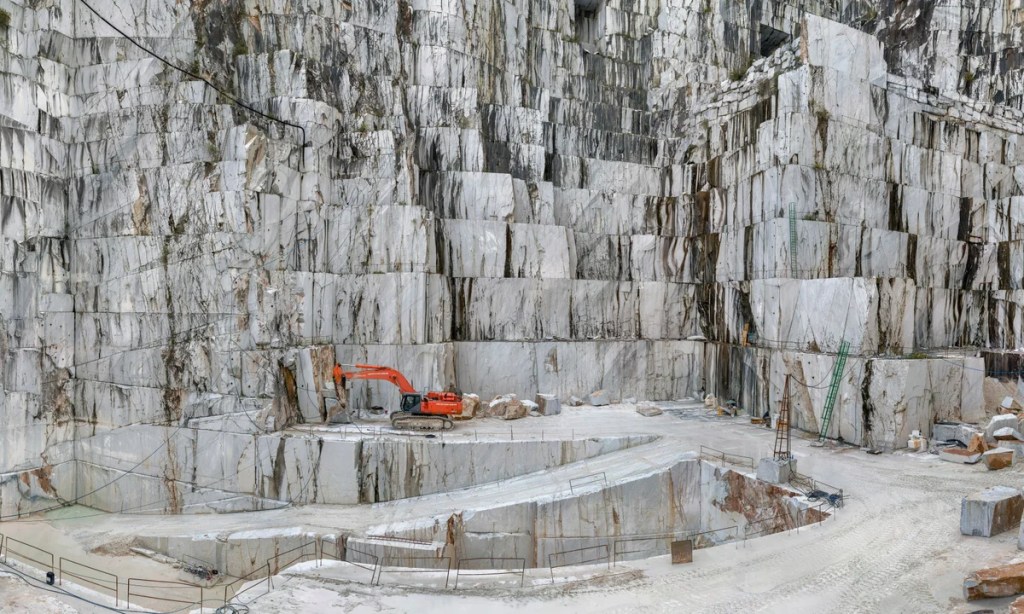
Figure 1: Marble quarry in Carrara, Italy
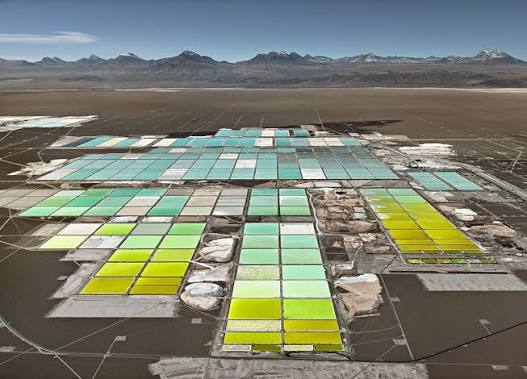
Figure 2: Lithium farm revealed after the camera zooms out.
One could call these disjointed moments of defamiliarization and subsequent recontexualization “visual fragments,” as the film does not follow any narrative and the only organizing principle it has is the seven themed sections it is split into: Extraction, Terraformation, Technofossils, Anthroturbation, Boundary Limits, Climate Change, and Extinction. These fragments deny an ‘immediate’ viewing experience for the viewer, forcing upon them cognitive participation and interpretation—or rather, mediation—as they recontextualize the ecological image set before them. Author Jenny Offill employs a similar form of truth-revealing realism in her 2020 novel Weather. Weather follows the story of Lizzie Benson, a library attendant with deep anxiety about climate change and a fascination with doomsday prepping. In Weather, Lizzie’s just started working for a futurist blog, while trying to juggle taking care of her recovering addict brother who has just had a baby, marital issues with her husband, and contemplations of an affair with a fellow survivalist. Similar to Anthropocene: The Human Epoch, Weather is composed of fragments, but these are literary rather than visual. In the same manner that Anthropocene: The Human Epoch reveals the obscured everyday truths of climate change through interviews with complicit factory workers and shots of children riding their bicycles down polluted city streets, Weather presents readers with the ‘in-between’ moments of protagonist Lizzie’s life as a way of ‘zooming out’ and highlighting the context and not the fantasies or cultural, capitalism-influenced associations of various subjects, akin to the ‘zoomed out’ perspective audiences receive of the natural resources in Anthropocene: The Human Epoch.
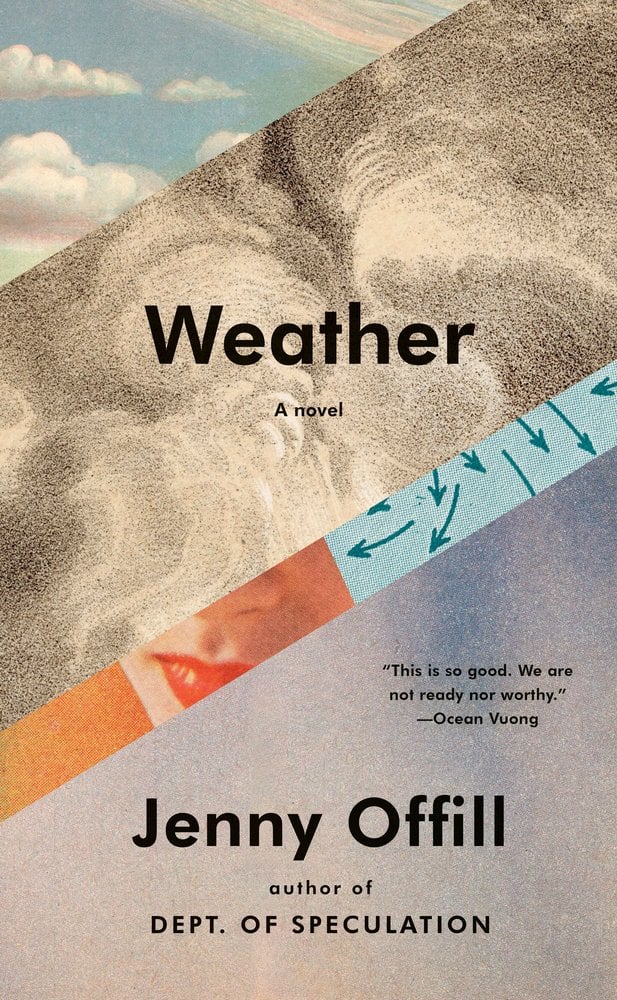
Offill’s fragments are very short and often vague. The novel is set right before the 2016 U.S. Presidential elections, and despite being set in such a contemporary and culture-defining moment, Offill avoids making any references that confine it to that moment in time, rather setting her novel in a sort of alienated present. For example, in part one, Lizzie watches her son, Eli, play the extremely popular video game Minecraft. Instead of naming the game, she says,
“This is the one that everyone likes. It is a 3-D procedurally generated world…They put together buildings block by block, then fill rooms with minerals that they have mined with pickaxes they have made” (Offill 10-11).
With Lizzie’s description and the novel’s underlying tension regarding her concern for the climate, it is hard not to imagine that Offill intentionally omits signifiers like Minecraft as to intentionally defamiliarize the audience with something she presumes they are familiar with—similar to Anthropocene: The Human Epoch’s manipulation of the scale of marble and lithium—in order to recontexualize it and reveal some truth that preconceived connotations and cultural associations have obscured. In the case of Lizzie’s nameless mention of Minecraft, it appears that Offill is ‘zooming out’ from the cultural object that is the game and reducing it to its barest form as a way of illuminating its eerie similarity to the environmental violence that takes place daily in real life and haunts Lizzie, but also the banality and widespread blindness to this violence through the deliberate mention that “This is the one that everyone likes” (Offill 10).
More notable fragments in Weather appear in part 3 of the novel, which takes place directly after what one can only assume is the 2016 elections, since Offill never explicitly states the name of the newly elected president. To begin the section, Offill writes,
“After the election, Ben makes small wooden things” (Offill 111).
On the next page, she says,
“There is advice everywhere, some grand, some practical…Women of reproductive age are being urged to get IUDs” (Offill 112).
Again, Offill presents readers with fragments that intentionally defamiliarize the reader, forcing them to confront not the object itself—in this case, she urges readers not to fixate on Donald Trump as a controversial political figure by never saying his name—but rather how people interact with, react to, and interpret that object within the context of their everyday, immediate lives, emotions, and experiences. This compares with how extreme close-ups are employed in Anthropocene: The Human Epoch, as the object that is the natural resource is rendered wholly unfamiliar through proximity and then subsequently recontextualized outside of the confines of capitalism and its evil banalities. The fragments that I argue define Anthropogenic climate realism and comprise both Weather and Anthropocene: The Human Epoch combat immediacy as Kornbluh defines it, instead promoting mediation as “the active process of relating” (Kornbluh 5). When faced with a dominant style of immediacy and entrenched in a hermetically sealed environment of ordinary complicity in ecological violence under capitalism, the subject of the Anthropocene requires a form that forces them to ‘zoom out,’ encouraging mediation which allows them to neutrally approach and reevaluate how they relate to the object before them, separate from society’s mores.
‘In the eminent tradition of aesthetic theory, “mediation” means the active process of relating—making sense and making meaning by inlaying into medium; making middles that merge extremes; making available in language and image and rhythm the supervalent abstractions otherwise unavailable to our sensuous perception—like “justice” or “value.” Now, this middling falters’ (Kornbluh 5).
Offill’s Weather is widely considered to be a work of autofiction; however, with the inclusion of the new visual and literary grammars through which I argue climate change and the Anthropocene must be represented if they are to achieve a kind of realism, this genre distinction becomes complicated. In the chapter “Writing” from Immediacy or, The Style of Too Late Capitalism, Kornbluh outlines the genre’s defining characteristics, stating that “[r]ather than narrativity and plot, [works of autofiction] purvey first-person present-tense uneventful short-spans, just elliptical ruminations in real time,” while trying to “get to the thing in themselves” (Kornbluh 68). Indeed, Offill’s novel encompasses each of these traits. Weather focuses on the fleeting, liminal moments and thoughts of Lizzie’s life, told from a first-person point of view and in the present tense. However, Kornbluh claims in the same chapter that autofiction is “immediacy as a literary style” and that it effaces mediation (Kornbluh 68). As previously stated, through an analysis of the forms of Weather and Anthropocene: The Human Epoch, mediation, not immediacy, gives rise to a form of realism specific to the Anthropocene. In Offill’s novel, defamiliarizing fragments actively promote mediation, making it impossible to define the novel as autofiction in the way Kornbluh conceives of it. Since Weather cannot be cleanly categorized as autofiction because it promotes the audience’s cognitive mediation and interpretation, despite containing almost all of the other defining elements of the genre, one could argue that it resides in and is even emblematic of the entirely separate genre of Anthropogenic climate realism and not autofiction.
Thus, one could further, ultimately claim that Anthropogenic climate realism is a mode of representation that is rooted in depicting the present-day and the ordinary, as other movements of realism also do, but what makes it a mode of realism specific to the Anthropocene is the abandonment of capitalistic immediacy and the encouragement of mediation within the audience that recontexualizes the subject’s relationship to the ongoing ecological catastrophe surrounding them achieved through a technique of fragmentation and the manipulation of a subject’s proximity to an object, or intentional defamiliarization. As previously stated, distance is the primary element that obscures the effects of the Anthropocene, and in identifying a realist form that adequately highlights the unique condition of the subject living in the Anthropocene, this distance must not merely be closed but manipulated so that mediation and recontexualization take place.
Works Cited
Berlant, Lauren. Cruel Optimism. Duke University Press, 2011.
Fay, Jennifer. “Do I Know the Anthropocene When I See It?” Representations, vol. 157, 2022, pp. 41-67.
Lukács, Georg. “Narrate or Describe?” Writer and Critic: and other essays, edited by Arthur Kahn, Merlin Press London, 1971, pp. 110-148.
Offill, Jenny. Weather. Knopf Doubleday Publishing Group, 2021.


Leave a comment